How Soon After You Deliver a Baby Can You Get Pregannt
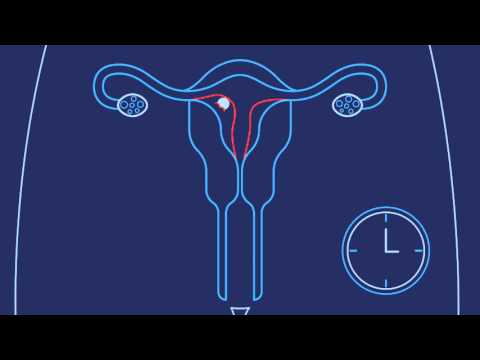
How does pregnancy happen?
In guild for pregnancy to happen, sperm needs to meet up with an egg. Pregnancy officially starts when a fertilized egg implants in the lining of the uterus. It takes up to two-3 weeks after sex for pregnancy to happen.
How do people go pregnant?
Pregnancy is actually a pretty complicated process that has several steps. It all starts with sperm cells and an egg.
Sperm are microscopic cells that are made in testicles. Sperm mixes with other fluids to make semen (cum), which comes out of the penis during ejaculation. Millions and millions of sperm come out every time you ejaculate — merely information technology only takes i sperm cell to meet with an egg for pregnancy to happen.
Eggs live in ovaries, and the hormones that control your menstrual cycle cause a few eggs to mature every month. When your egg is mature, it ways it's ready to exist fertilized by a sperm cell. These hormones also make the lining of your uterus thick and spongy, which gets your torso ready for pregnancy.
When a sperm cell joins with an egg, it'due south called fertilization. Fertilization doesn't happen right away. Since sperm tin can hang out in your uterus and fallopian tube for up to half-dozen days after sexual practice, there's upwards to half-dozen days between sexual activity and fertilization.
If a sperm cell does bring together up with your egg, the fertilized egg moves down the fallopian tube toward the uterus. Information technology begins to divide into more and more cells, forming a brawl as it grows. The ball of cells (chosen a blastocyst) gets to the uterus well-nigh 3–iv days subsequently fertilization.
Implantation usually starts about half-dozen days afterwards fertilization, and takes about three-4 days to consummate. The embryo develops from cells on the inside of the ball. The placentadevelops from the cells on the exterior of the ball.
When a fertilized egg implants in the uterus, it releases pregnancy hormones that foreclose the lining of your uterus from shedding — that'south why people don't get periods when they're meaning. If your egg doesn't meet up with sperm, or a fertilized egg doesn't implant in your uterus, the thick lining of your uterus isn't needed and it leaves your body during your period. Up to half of all fertilized eggs naturally don't implant in the uterus — they pass out of your body during your period.
What are early pregnancy symptoms?
Many people notice symptoms early in their pregnancy, but others may non take any symptoms at all.
Common signs and symptoms of pregnancy can include:
-
Missed period
-
Bloated or tender breasts
-
Nausea and/or vomiting
-
Feeling tired
-
Bloating
-
Constipation
-
Peeing more often than usual
Some early pregnancy symptoms can sometimes feel like other mutual conditions (like PMS). So the simply mode to know for sure if you're pregnant is to take a pregnancy test. You lot can either take a home pregnancy exam (the kind you buy at the drug or grocery store), or become a pregnancy exam at your doctor's office or local Planned Parenthood Health Center.
How do people get meaning with twins?
In that location are 2 means that twins can happen. Identical twins are made when ane already-fertilized egg splits into two divide embryos. Considering identical twins come from the aforementioned sperm and egg, they have the same genetic material (DNA) and expect exactly alike.
Not-identical twins (as well called "fraternal" twins), are made when two separate eggs are fertilized by ii dissever sperm, and both fertilized eggs implant in the uterus. This tin happen if your ovaries release more than i egg, or during certain kinds of fertility treatments. Non-identical twins accept completely dissimilar genetic material (DNA), and commonly don't look alike. They're the most common blazon of twin.
What is gestational age?
The term "gestational age" basically ways how far along into a pregnancy you are. Gestational age is counted by starting with the first twenty-four hour period of your concluding menstrual period (called LMP).
Gestational age can exist kind of confusing, since it measures pregnancy from your last period — almost 3-four weeks BEFORE you're actually pregnant. Common knowledge nigh pregnancy says it lasts 9 months, and it's true that you're usually pregnant for about 9 months. But the mode pregnancy is measured makes it a fiddling longer. A typical full-term pregnancy ranges from 38-42 weeks LMP — around 10 months.
Many people can't remember the verbal date of their last menstrual menstruation — that'south totally okay. Your nurse or doc can find out the gestational age using an ultrasound.
More questions from patients:
Or call 1-800-230-7526
Source: https://www.plannedparenthood.org/learn/pregnancy/how-pregnancy-happens
0 Response to "How Soon After You Deliver a Baby Can You Get Pregannt"
Post a Comment